Skip to content

Pickleball Ball Recommendations (2026): Best Picks for Indoor, Outdoor, Tournament, and Quiet Play

CEO & Technical Expert at Pickleball Equipment Company (Art Pickleball)
Specialize in manufacturing pickleball paddles, pickleball balls, and pickleball accessories.
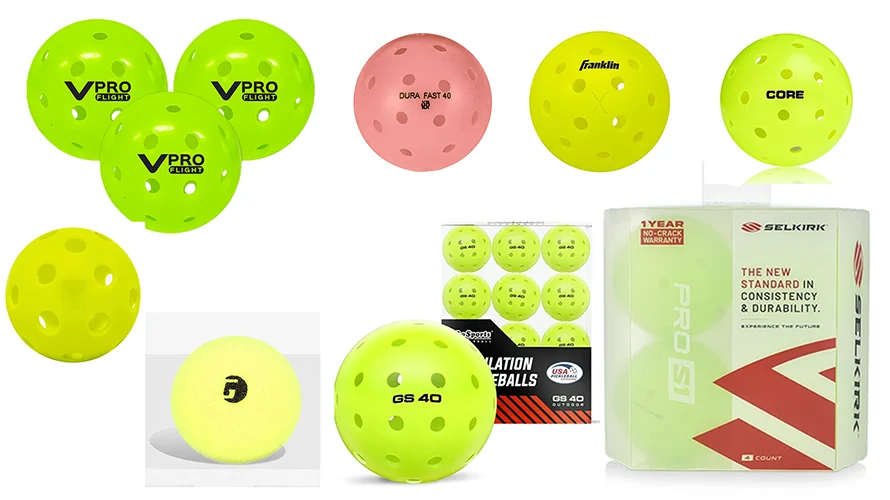
Looking for pickleball ball recommendations you can actually trust?
Our pickleball ball recommendations come from screening popular models for roundness, bounce feel, and real-world durability during on-court sessions.
The result is a short list that stays predictable for outdoor rec play, indoor gyms, windy days, colder temps, drilling, and quiet courts.
Check the quick picks table below and pick the right ball fast.
Pickleball Ball Recommendations at a Glance
Here are the fastest picks by situation.
| Quick Pick (Brand/Model) | Best for | Feel | Durability | Why it’s recommended |
|---|---|---|---|---|
| Franklin X-40 Outdoor | Best overall outdoor (most players) | Medium-fast, predictable | Medium-high | Familiar “club ball” feel that works for most outdoor rec play |
| ONIX Dura Fast 40 | Fast competitive outdoor play | Fast, crisp, lively | Medium | High pace and firm response for aggressive games |
| Vulcan VPRO FLIGHT | Windy outdoor courts | Stable flight, crisp | Medium | More predictable flight when wind is part of your court |
| Selkirk Pro S1 | Durability-first outdoor play | Medium-fast | High | Strong durability reputation and consistent play feel |
| CORE Outdoor | Cold-risk outdoor play | Medium-fast | Medium-high | Common go-to when cracking becomes a recurring cold-weather issue |
| Franklin X-26 Indoor | Best indoor control (gym floors) | Slower, control-first | Medium | Indoor-style feel that’s easier to manage on smooth floors |
| GoSports GS40 | Drilling + bulk practice value | Medium | Medium | Solid value when you need reps and replacement-friendly pricing |
| GAMMA Librarian Foam | Quiet / noise-sensitive play | Slower, muted | Varies | Lower noise option when sound rules determine whether you can play |
Two fast rules that save most people money:
- If your league or weekly group uses one model, match it. Consistency beats “best on paper.”
- If you play in cold weather, bring backups. Cracking can happen in batches.
How We Picked These Balls
We kept the selection process simple and practical.
We prioritize ball-to-ball consistency (roundness, seam quality, and stable bounce) because inconsistency is what players notice immediately.
We weigh durability in real conditions, especially court abrasion and temperature swings.
And we factor in play feel at different speeds—dinks, resets, drives, and hands battles—so the recommendations make sense for the pace you actually play.
Start Here: Choose by Surface First (Not “Inside vs Outside”)
Most people choose a ball based on whether they’re indoors or outdoors.
A better approach is to choose by surface and environment:
Outdoor hard courts (asphalt, concrete, acrylic sport court): you usually want an outdoor-style ball built for abrasion and wind stability.
Indoor gym floors (wood, vinyl sport floors): you usually want an indoor-style ball focused on control and predictable bounce on smooth surfaces.
If you want a clean breakdown with examples, read:indoor vs outdoor pickleball balls.
The 5 Things That Actually Matter When Choosing a Pickleball
If you understand these five factors, every list becomes easier to evaluate.
1. Court abrasion
Rough courts chew through balls faster.
If your balls scuff quickly or start flying weird after a few sessions, durability should move up your priority list.
2. Wind and flight stability
Wind exposes weak ball design immediately.
If your court is open and breezy, prioritize stable flight and consistent shape over “soft feel.”
3. Temperature swings
Cold makes many plastics more brittle.
Heat can make balls feel softer or “dead” faster.
If your climate swings, plan for it and keep backups.
4. Pace preference (control vs speed)
Some players want a firm, fast ball that “pops.”
Others want a slightly slower, control-first response.
Neither is right or wrong—your court and group decide what feels “right.”
5. What your group actually plays with
This is the underrated factor.
If your club or weekly game uses one model consistently, matching it improves your timing and consistency faster than chasing the “best rated” option online.
Recommendations by Use Case
This is the part most readers came for.
Each pick below is written so you can decide quickly.
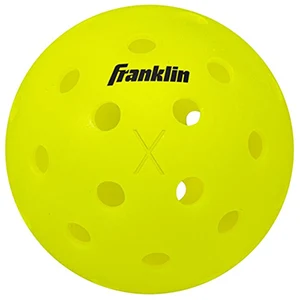
Best Overall Outdoor Ball: Franklin X-40 Outdoor
Who it’s for:
Most outdoor recreational play on typical hard courts.
Why it works:
The X-40 outdoor pickleball is a well-known “balanced” outdoor option: predictable bounce, familiar pace, and dependable performance for mixed-skill games.
What you’ll notice on court:
- A pace that most groups consider “normal”
- Predictable bounce and feel
- Reliable play for casual games, leagues, and open play
Trade-offs:
- In heavy wind, you may prefer a stability-forward option
- On very rough courts, you’ll still replace balls regularly
Buy this if:
- You want one outdoor ball that works in most situations
- Your group wants a familiar, consistent feel
Skip this if:
- Your courts are consistently windy
- You want a noticeably faster, crisper competitive feel
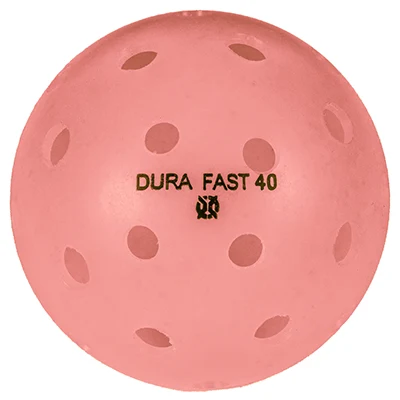
Best Fast Competitive Outdoor Ball: ONIX Dura Fast 40
Who it’s for:
Players who like faster rallies, quick hands battles, and a firm response.
Why it works:
When players can handle pace, a fast ball makes the game feel sharper and more reactive.
What you’ll notice on court:
- More “pop” off the paddle
- Faster exchanges at the kitchen
- Clear feedback on drives and speedups
Trade-offs:
- Can feel too fast for newer players or mixed groups
- In colder conditions, hard impacts can raise cracking risk for many outdoor balls
Buy this if:
- Your games are competitive and speed-driven
- Your group prefers a crisp, fast ball
Skip this if:
- You want slower, control-first play
- Your group complains about the game feeling too “hot”
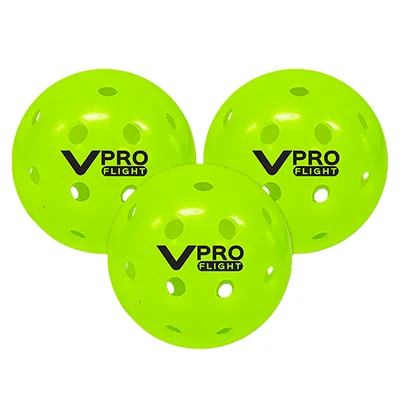
Best for Windy Outdoor Courts: Vulcan VPRO FLIGHT
Who it’s for:
Outdoor players on open courts where wind changes points.
Why it works:
Wind punishes floaty flight patterns.
A wind-friendly option emphasizes stable flight and consistent shape, so shots stay more predictable.
What you’ll notice on court:
- Fewer weird mid-flight deviations
- More predictable serving and driving
- Better confidence hitting higher arcs on breezy days
Trade-offs:
- Many wind-stable balls feel a bit firmer
- Some players prefer a slightly slower ball for soft-game reps
Buy this if:
- Wind is a constant on your courts
- You want results to reflect skill more than weather
Skip this if:
- Your courts are sheltered
- Your priority is soft feel and a slower pace
Best Durability-First Outdoor Ball: Selkirk Pro S1
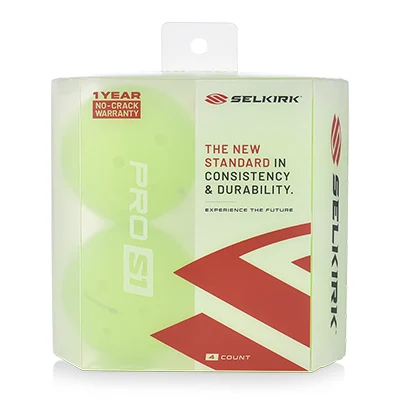
Who it’s for:
Players and facilities that prioritize longevity and shape consistency.
Why it works:
Durability-first balls aim to reduce “swap the ball every session” problems, especially when courts are rough or volume is high.
What you’ll notice on court:
- Fewer “this ball feels different” moments mid-game
- More confidence that the ball stays round and consistent
- Better longevity for many players compared to basic outdoor options
Trade-offs:
- Feel differences are real; some players love it, others prefer a classic X-40 feel
- You still need replacement planning if play volume is high
Buy this if:
- Your courts are abrasive
- You want fewer surprise duds and longer usable sessions
Skip this if:
- You play occasionally and don’t mind replacing balls
- Your group strongly prefers a traditional outdoor feel
Best Cold-Risk Outdoor Pick: CORE Outdoor
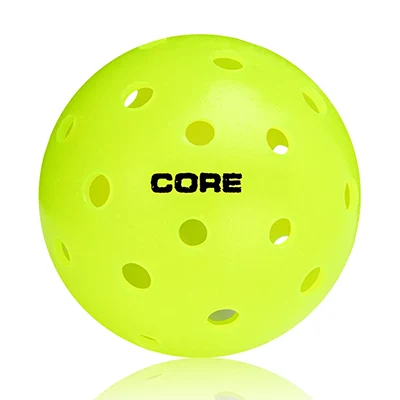
Who it’s for:
Outdoor players in colder months who see frequent cracking.
Why it works:
Cold increases brittleness in many plastics, and hard impacts on cold, rough courts can cause sudden cracks.
Players often shift toward durability-forward options once winter play starts breaking balls regularly.
What you’ll notice on court:
- A reliable outdoor feel with a durability-forward reputation
- Fewer “one game and it’s done” surprises for many players (conditions still matter)
Trade-offs:
- No ball is immune to cold + rough court + hard impacts
- You should still bring backups on cold days
Buy this if:
- You regularly play outdoors in colder conditions
- You want fewer session-killers from cracked balls
Skip this if:
- You play in mild temperatures year-round
- Your current outdoor ball lasts long enough already
Best Indoor Control Ball: Franklin X-26 Indoor
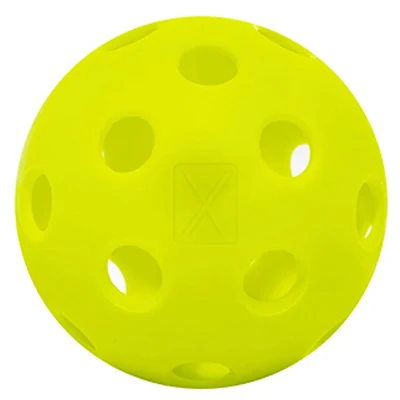
Who it’s for:
Indoor play on gym floors where control and predictable bounce matter most.
Why it works:
Indoor-style balls typically play better on smooth surfaces with a slower, more controllable response.
What you’ll notice on court:
- Easier resets and softer touch
- Less “hot” pace than many outdoor balls indoors
- More comfortable control for mixed skill levels
Trade-offs:
- Many indoor balls feel floaty outdoors and scuff faster on rough courts
- Some indoor groups prefer outdoor balls indoors to increase pace
Buy this if:
- You mostly play indoors
- You want control-first play on gym floors
Skip this if:
- Your indoor group already uses outdoor balls consistently
- You want maximum speed indoors
Best for Drilling, Clinics, and Bulk Practice: GoSports GS40
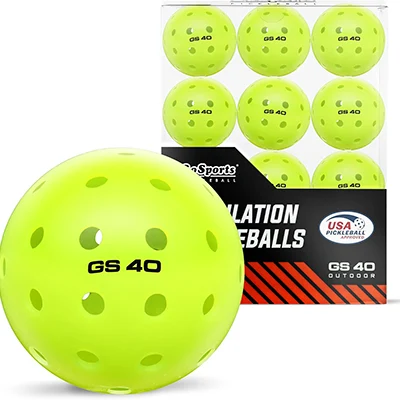
Who it’s for:
Coaches, clinics, ball machines, and anyone who goes through a lot of balls.
Why it works:
When volume is high, you want a ball that’s consistent enough for reps and priced reasonably enough to replace.
What you’ll notice on court:
- A practical “workhorse” feel
- Easy to stock multiple packs for training
- Better cost-per-session for frequent practice
Trade-offs:
- No bulk ball lasts forever on rough courts
- Mixing lots and brands can create noticeable inconsistencies
Buy this if:
- You drill frequently
- You need bulk inventory and a sane replacement budget
Skip this if:
- You’re preparing for a specific event ball feel and want a tight match
- You rarely drill and mostly play match games
Best Quiet Option: GAMMA Librarian Foam
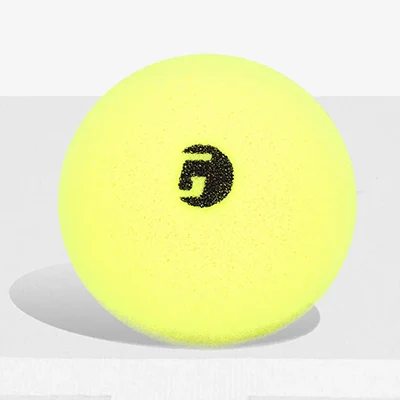
Who it’s for:
Noise-sensitive courts, HOA areas, parks, or facilities where sound complaints limit play.
Why it works:
Quiet pickleball balls reduce the sharp “crack” sound that triggers noise issues.
What you’ll notice on court:
- Lower sound
- Typically slower, more muted response
- Fewer conflicts where noise is the real gatekeeper
Trade-offs:
- Quiet balls usually won’t feel like standard match balls
- Bounce and durability profiles vary by quiet-ball design
Buy this if:
- Sound restrictions affect whether you can play at all
- You manage courts and want fewer complaints
Skip this if:
- You want practice to match standard outdoor match feel closely
- Your courts have no noise restrictions
Quick Decision Tree: 5 Questions to Pick the Right Ball
If you want the shortest path to a confident buy, use this.
What surface are you playing on?
Outdoor hard court: start with Franklin X-40 Outdoor
Indoor gym floor: start with Franklin X-26 Indoor
Is wind a factor?
Yes: lean toward Vulcan VPRO FLIGHT
No: choose by durability and feel
Is it cold where you play?
Yes: bring backups and consider CORE Outdoor
No: default outdoor picks typically hold up fine
Do you want more control or more speed?
Control: Franklin X-26 Indoor
Speed: ONIX Dura Fast 40
Are you matching a league or group ball?
Yes: match it, even if another ball is “better” online
No: pick from the quick picks table and stop overthinking it
Indoor vs Outdoor and Hole Patterns (26 vs 40 and More)
Most players learn “indoor equals fewer holes, outdoor equals more holes.”
That’s directionally helpful, but hole design is really about how the ball behaves:
- Flight stability (especially in wind)
- Pace and feel
- Consistency as the ball wears
- Predictability on touch shots vs drives
Specs and Standards in Plain English
If you play purely recreational games, you don’t need to obsess over standards.
But if you play leagues, sanctioned events, or you’re buying for a facility, standards help you avoid surprises.
Practical takeaway:
- Regulation balls stay within defined size/weight/bounce expectations
- Roundness and bounce consistency matter because they affect fairness and repeatability
- Organized play often prefers balls that clearly align with common standards and acceptance criteria
If your event specifies a ball, use that ball.
If it doesn’t, choose a reputable pick that matches your court and climate.
How Long Do Pickleballs Last (And When to Replace Them)
There isn’t a universal “X hours” answer.
Court roughness, temperature, and play intensity change everything.
Use replacement signals instead.
Replace a ball if you see:
- Cracks or splits
- Out-of-round wobble (roll it on a flat surface)
- Noticeably dead bounce compared to your other balls
- Deformed holes or heavy scuffing that changes flight
Make balls last longer:
- Store them at moderate temperatures
- Rotate balls during drilling instead of burning one ball down
- Don’t leave balls in a hot car or freezing garage
- If it’s cold, bring extras and expect higher loss
Buying for Clubs, Schools, and Facilities (Bulk Recommendations)
If you’re buying more than a couple sleeves, your goal isn’t “best ball.”
Your goal is consistent play across weeks.
Here’s how to buy smarter in bulk.
1. Separate match balls from drill balls
- Keep “game balls” reserved for match play
- Move worn balls into a drill bucket
- Avoid mixing new and worn balls in league games (players feel it immediately)
2. Plan inventory around usage
A simple approach:
- Enough match balls to run your busiest session without mixing worn balls
- Enough drill balls to support clinics, feeding, and high-rep training
- A replacement buffer so you don’t get forced into mixing models mid-season
3. Keep models consistent when possible
Mixing random brands and lots is how you get:
- “This one feels weird.”
- “This one bounces dead.”
- “This one flies different.”
Pick one match model and stick to it.
4. Do quick incoming checks (takes minutes)
You don’t need a lab to catch obvious issues:
- Roll test for wobble
- Visual check for seam flaws and deformed holes
- Quick bounce comparison across a small sample
If you manage a club or facility, you’ll get better results by defining requirements upfront: surface type, local temperature range, wind exposure, pace preference, and any noise constraints.
Conclusion
The best pickleball isn’t universal—it’s the one that matches your court, weather, and how your games actually play. This guide gives you quick, brand-name picks for outdoor, indoor, wind, cold, drilling, and quiet play, plus a simple decision tree to remove guesswork. Keep your sessions consistent by matching your group’s ball and swapping out worn balls early.
If you’re building a brand and need custom pickleball balls, contact Art Pickleball for OEM/ODM production, custom hole patterns and materials, logo/graphic printing, retail-ready packaging, and reliable bulk supply.
FAQs: Pickleball Ball Recommendations
Q1. What pickleball do most people use right now?
Most outdoor recreational groups use a mainstream outdoor ball with a familiar feel and easy availability. In practice, the best move is often matching the model your local group already plays with.
Q2. What’s the best outdoor pickleball for recreational play?
For most players, Franklin X-40 Outdoor is a safe starting point because it offers predictable bounce and a balanced pace.
Q3. What’s the best indoor pickleball for gym floors?
Most are, but not all. “40 holes” is the most common outdoor configuration because it tends to be stable in wind and predictable on hard courts.
Q4. What’s the difference between indoor and outdoor pickleballs?
Indoor balls tend to prioritize control on smooth floors and often use fewer, larger holes. Outdoor balls are built for abrasion resistance and stable flight on rougher surfaces, especially in wind.
Q5. Do indoor pickleballs usually have 26 holes and outdoor 40?
That’s a common pattern, but hole count alone doesn’t tell the whole story. Hole size, layout, material feel, and shape consistency all affect how the ball plays.
Q6. What ball should I practice with for leagues or tournaments?
Practice with the ball your league or event uses. Consistency matters more than picking the “best” ball online.
Q7. Why do pickleballs crack more in cold weather?
Cold can make many plastics more brittle, and hard impacts on cold, rough courts increase cracking risk. Bring backups and expect higher ball loss in winter conditions.
Q8. How long does a pickleball ball last?
It depends on court roughness, temperature, and play volume. Replace balls when you see cracks, wobble, or noticeably dead bounce.
Q9. Can I use outdoor balls indoors?
Yes, and many groups do. The trade-off is that outdoor balls can feel faster and louder indoors, and they may play “hot” on tight gym courts.
Q10. Are quiet pickleballs worth it?
If noise restrictions affect whether you can play at all, yes. Quiet balls can reduce complaints and keep courts accessible, even if the feel differs from standard hard balls.